Against elections
“It would appear that people like the idea of democracy but not the reality of it”, here is a recent survey on satisfaction with democracy. I’m not an exception. There is something wrong with democracy going on isn’t it? The provocative title of the book “Against Elections: The Case For Democracy” should trigger some questions. Is the author insane - what he suggests, no elections, why should I read that even?
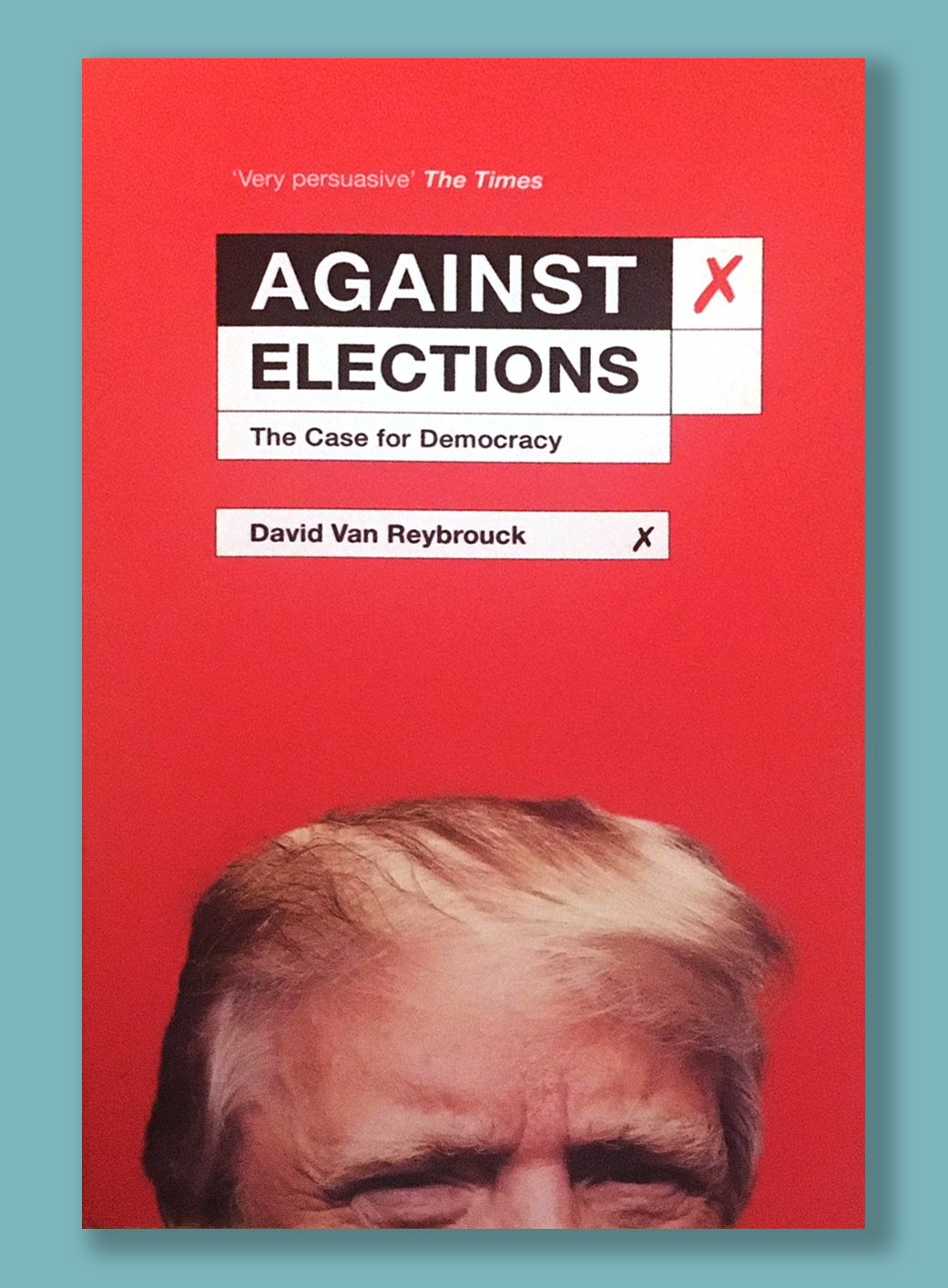
I think the title served both sides for good and for bad. Some people start judging the book by its title already without reading it. That’s a pity. Last year was a ‘super year’ for elections, 72 countries had election campaigns with a total population of 3.7 bln where voted 1.64 bln. However, it is questionable whether it was to strengthen democracy, seems rather not. Although the book of David van Reybrouck was written in 2013, it seems not losing its relevance.
Very concise, straight to the point, not heavy, nor long rather an essay exploring the burning question. What’s wrong with the elections within democracy? Is it democratic mechanism at all? Although the author argues it’s not, he doesn’t suggest canceling elections either, contrary to the provocative title of his book.
For me, being non-professional in political sciences there have been a lot of new and eye opening facts. Details of government institutions in Athens were fascinating to read. It’s not only about the past. The book is very well balanced - going back in time arguing with historic facts at hand, very convincing for me, that elections have never been intended as democratic instrument. The historical perspective on the elections from before 1800 till nowadays was one of the most fascinating and illuminating aspects for me, revealing a troubling similarity to the 1920s–1940s, when economic crises threatened democracy and elections, ultimately leading to WWII.
The highlights from modern history, for example the decision on change of constitution articles in Ireland, and the change of constitution in Iceland are not less interesting. All these involve lots or random sampling of people who discuss questions in working groups and then conclude to a decision or recommendation. I guess the remedy that is suggested - a mix of lots and elections appeals to me because I agree with one of the key thoughts of the author. Smartly designed random samples from the people will be more representative of the crowd than what is present now in most parliaments of democratic countries.
The proposed solution to overcome democracy fatigue, though simple and feasible, seems unrealistic due to resistance from elites, journalists, and others close to power. Since the book’s release in 2013, time has shown that examples of deliberative democracy remain largely local, while many still view elections as a cornerstone of democratic institutions. Democrats join 2024’s graveyard of incumbents
Overall it’s an excellent, easy and very sobering read for those who do not have professional knowledge in political science. You’ll learn a lot of unknown facts and maybe receive answers to a question: ‘What’s wrong with democracy and elections in particular?’.